
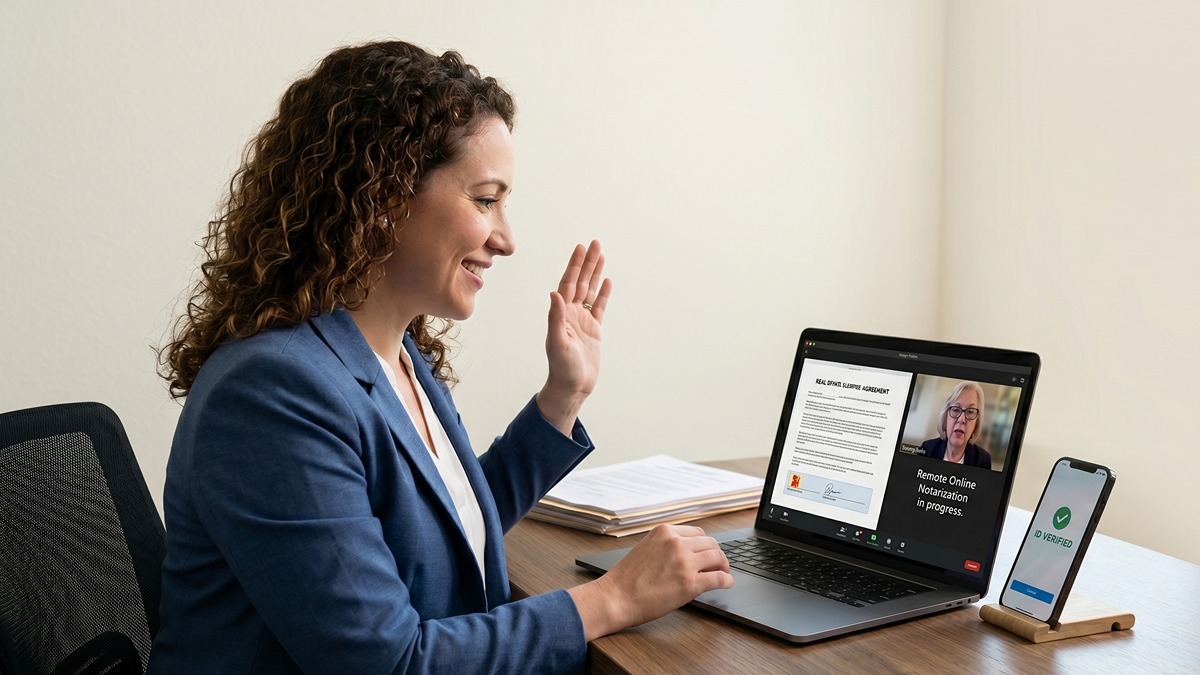
Is Remote Online Notarization (RON) Legal in Pearland?
Everything You Need to Know about Remote Online Notarization (RON)
If you live or work in Pearland and need a document signed, you do not have to leave your house. Remote Online Notarization (RON) is 100% legal in Pearland and across the entire state of Texas. Under state law, a licensed Texas notary can legally handle your paperwork virtually through a secure video call. The best part? While the notary must be in Texas, the person signing the document can be located anywhere in the United States or even across the world.
Imagine not having to fight the traffic on Broadway Street just to find a notary. Whether you are busy at the office, taking care of family at home, or traveling out of state, digital signing makes life much easier.
But how does this digital process hold up under Texas law? Can you safely use an online notary for major contracts, real estate deals, or vehicle titles?
Let's dive into the details. Here is everything you need to know about using an online notary in the Pearland area.
The Legal Side: What Does Texas Law Say?
Some states only started looking into online signing recently. However, Texas was way ahead of the curve. The state permanently passed the law to allow online signings all the way back in 2017.
The main law that made this happen was Texas House Bill 1217 (H.B. 1217). This bill went into full effect on July 1, 2018. It changed the game by creating a clear legal path for digital signatures and digital notary seals.
If you want to look at the exact rules, they are written down in Subchapter C, Chapter 406 of the Texas Government Code. The law states that an online signing has the exact same legal power as a traditional, face-to-face signing on paper.
To learn more about the basics of getting your paperwork handled properly, check out our comprehensive guide to getting documents notarized. It serves as an excellent starting point for any legal paperwork project.
How Does Remote Online Notarization Work?
A lot of people assume that an online signing is just a regular video call on Zoom or FaceTime. But the state of Texas actually strictly bans the use of normal video apps for this work. The law demands a highly secure, specialized computer system.
The process uses a digital workflow that follows a very specific set of steps to keep your data safe:
Document Upload: You start by uploading your digital document (usually a PDF) into a secure, state-approved platform.
Identity Proofing: Before you see the notary, the computer platform tests your identity. You will take a picture of your driver's license or passport. Then, you will answer a few security questions to prove you are really you.
Live Video Session: You will connect with a live Texas notary over a secure video link. The notary will check your ID on camera and ask if you are signing the form willingly.
Electronic Signing: You will click to apply your digital signature to the screen.
Digital Seal: The notary will apply their official digital seal and certificate. This acts as a digital fingerprint. If anyone tries to alter the document later, the digital seal will instantly break and show that the file was tampered with.
Once the session wraps up, you can immediately download your fully legal, completed document.
Where Must the Notary and the Signer Be Located?
The physical location rules are very specific under Texas law, and they actually give you a lot of flexibility:
The Notary: The notary public must be physically located within the borders of Texas at the exact moment of the video call. Even though the work is digital, a Texas notary cannot perform an online signing if they are on vacation in another state.
The Signer (You): You do not have to be in Pearland. In fact, you can be located anywhere in the world. As long as you are a U.S. citizen or have the proper legal identification, you can log on from any state or country and get your Texas documents legally stamped.
How Much Does an Online Notary Cost in Pearland?
Fees for traditional notaries are usually very low, but online signings require specialized, secure software platforms to verify identities and record sessions. Because of this, Texas law allows for a different fee structure.
According to Texas Government Code Section 406.109, an online notary is allowed to charge a fee of up to $25 for each online notarization act.
While $25 might seem higher than a quick trip to the bank, most people find that the time, gas, and energy saved by staying home and skipping the traffic makes it well worth the price. However, if you have a huge stack of paper documents or prefer having someone stand right next to you at your kitchen table, a mobile notary might be a better fit. You can read our detailed breakdown on what to expect from a mobile notary visit and how much it costs to compare your options.
Are There Any Documents That Cannot Be Notarized Online?
Even though the state loves digital options, you cannot use RON for absolutely everything. Texas law explicitly carves out a few special exceptions.
Under the Texas Uniform Electronic Transactions Act, you are not allowed to use electronic signatures or online notarizations for certain family and estate planning papers. These include:
Wills and Codicils: A codicil is an amendment or addition to an existing will.
Testamentary Trusts: These are trusts created inside a person's last will and testament.
These specific documents still require old-fashioned ink signatures on physical paper with a notary physically standing in the room. This rule protects families from fraud during emotional times.
For instance, if an elderly relative is staying in a local medical facility, an online video call might not be an option for their estate papers. In those cases, you can read our specialized hospital and nursing home notarization guide to see how to arrange a safe, legal, in-person visit.
Security and Record Keeping
What happens after your video call ends? Texas law requires online notaries to keep incredibly strict records to prevent fraud and protect your identity.
According to state rules, the notary must save a secure audio-visual recording of the entire video session. They must also maintain a highly detailed electronic journal.
Per Texas law, these recordings and journal entries must be safely stored for at least five years from the date of the signing. If a court or a bank ever questions whether you actually signed that deed or contract, the video proof is safely archived and ready to protect you.
Summary: Your Best Choice in Pearland
Remote Online Notarization is modern, secure, and completely legal for Pearland residents. Thanks to progressive state laws like House Bill 1217, you have the legal right to skip the lines and handle your business entirely from your computer or phone.
At Notalis Notary, we make the digital signing process completely stress-free. If you are ready to skip the traffic and get your documents stamped in minutes, you can book our secure Remote Online Notarization services today. As long as your document isn't a will, and your notary is registered with the Texas Secretary of State, you can confidently sign your next agreement online!